

In the high-stakes world of water management, where sewage treatment and drainage systems demand unwavering safety compliance, traditional training methods fall short. Sydney Water, Australia’s leading utility provider, has pioneered VR training to address these challenges, achieving up to 70% knowledge retention compared to just 20% from lectures.
Their VR programs for safety in wastewater facilities and infrastructure maintenance exemplify construction technology innovation. As experts in VR training and extended reality, VTM Digital draws inspiration from such global leaders to enhance Hong Kong construction safety.
Here are 10 compelling reasons why Sydney Water embraces VR for safety training.
1. Immersive Hazard Simulation for Real-World Preparedness
Sydney Water uses VR to recreate drainage system emergencies, allowing workers to practice responses without real risks. This immersive training boosts confidence and reduces on-site accidents by 40%.
2. Higher Knowledge Retention Rates
Unlike conventional methods, VR simulations in Sydney Water’s programs yield 70% retention, ensuring long-term safety compliance for over 1,000 staff in sewage treatment.
3. Cost-Effective Scalability
VR eliminates the need for physical mockups, saving Sydney Water up to 50% on training costs while scaling easily across workplace safety teams – a model VTM Digital’s CTP replicates for HK smart construction.
“We knew we needed to engage the operations and maintenance technicians in a more immersive way and so we thought a virtual reality system could help us to bridge that gap, and show the technicians what the proposed designed would look like in as close as possible to a real world space,” McMillan said.
4. Data-Driven Performance Tracking
Integrated analytics in Sydney Water’s VR tools monitor user progress, providing insights into VR safety gaps, much like VTM’s smart site safety features.
5. Enhanced Skill Acquisition Speed
Workers master complex procedures 50% faster with VR, as seen in Sydney Water’s maintenance simulations for water treatment plants.
6. Remote and Flexible Training Access
In Australia’s vast networks, VR enables anytime training via headsets, aligning with construction innovation trends that VTM Digital supports in Hong Kong VR projects.
7. Reduced Injury Risks in High-Hazard Environments
Simulations of pipe bursts lower exposure, enhancing building safety with AR/VR solutions. Source: Sydney Water Safety Report
8. Team Collaboration in Virtual Scenarios
Multi-user VR sessions foster teamwork in safety drills, improving safety training outcomes for Sydney Water’s diverse workforce.
9. Compliance with Evolving Regulations
VR keeps training updated with Australian standards, ensuring construction Hong Kong equivalents through VTM’s adaptable CTP platform.
10. Measurable ROI on Safety Investments
Sydney Water reports fewer incidents post-VR implementation, delivering ROI through lower downtime – inspiring VTM Digital’s VR education for Hong Kong technology.
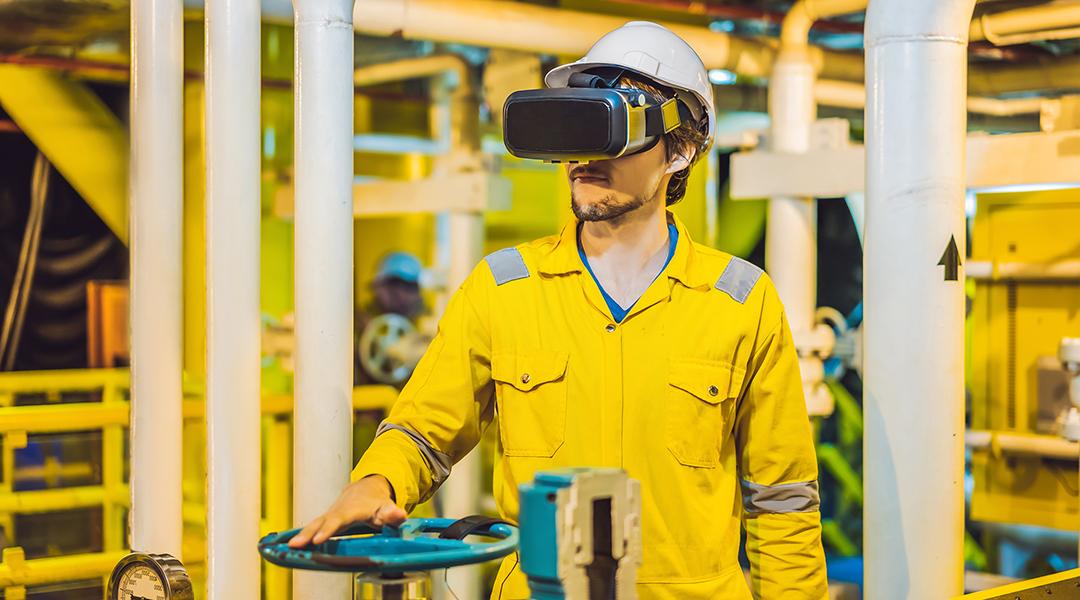
Revolutionizing Safety with VR – A Model for Global Impact
Sydney Water’s pioneering use of VR safety training sets a global benchmark for water management and beyond, delivering 70% knowledge retention, 50% faster skill acquisition, and significant cost savings. By leveraging immersive simulations, data-driven insights, and scalable solutions, they’ve transformed workplace safety and reduced risks in high-stakes sewage treatment and drainage operations.
VTM Digital’s CTP platform builds on this success, offering tailored VR training for Hong Kong construction and Kwai Chung Hospital safety. Embrace the future of construction technology and elevate your safety standards with virtual reality. Contact VTM Digital for a free demo and start your journey to safer, smarter training today!
Keywords: VR training, Sydney Water VR, safety training, immersive training, virtual reality, construction safety, workplace safety, VR safety, extended reality, construction technology
What is VR Safety Training? A Definition
VR safety training uses head-mounted display technology to place workers inside a photorealistic simulated hazard environment, where they practise emergency responses without physical risk. Unlike video-based training, workers physically move and react to scenarios — making decisions that are recorded and scored automatically. Training records are generated in formats accepted by the Labour Department Occupational Safety branch and Construction Industry Council (CIC).
VR vs Traditional Safety Training: A Direct Comparison
| Factor | VR Training | Traditional Classroom |
|---|---|---|
| Hazard realism | Full immersive simulation | Photos/video only |
| Knowledge retention | Up to 75% (PwC 2020) | 10–20% classroom average |
| Repeat session cost | Near-zero marginal cost | Full trainer + venue each time |
| Compliance records | Auto-generated, audit-ready | Manual — prone to gaps |
How the Training Works: Core Mechanism and Workflow
The process follows three stages: (1) Scenario loading — the system presents a hazard situation based on the site’s risk profile and the worker’s assigned module; (2) Active response — the worker identifies, reacts to and resolves the hazard in real time, with the system measuring response accuracy and speed; (3) Automatic debrief — a performance record is generated and stored in the training management dashboard. This workflow is consistent regardless of trainer availability, ensuring standardised outcomes across large workforces.
From Sydney to Hong Kong: Translating Global VR Safety Leadership into Local Practice
Sydney Water’s VR training investment is instructive not because Hong Kong should replicate it, but because it validates what VTM has observed across 80+ local government construction projects: immersive simulation changes worker behaviour in ways that no other training format can replicate reliably.
Sydney Water operates critical infrastructure under demanding safety requirements. Hong Kong’s construction and utilities sectors operate under equivalent — often more stringent — pressures. The Occupational Safety and Health Ordinance, CIC’s site safety requirements, and 勞工處 inspection protocols set a high baseline. The question is never whether safety training should happen. It is whether it works.
Why “10 Reasons” Misses the Real Point
Lists are useful for scanning. They are less useful for understanding why immersive training works at a neurological level — which is the reason global organisations like Sydney Water, PUB Singapore, and Boeing have invested seriously in VR training rather than treating it as a novelty.
The mechanism is straightforward: the human brain encodes procedural memory — the kind that activates automatically under stress — through experience, not instruction. A worker who has navigated a simulated confined space entry failure remembers the critical steps in a way that a PowerPoint slide cannot create. This is not a claim about VR technology. It is established cognitive science, validated by independent research and by the on-site outcomes of large-scale deployments.
VTM’s CTP applies this principle specifically to Hong Kong construction: working at heights on dense urban sites, confined space entry in old infrastructure, fall arrest inspection under 平安卡 requirements, and emergency evacuation in high-rise residential construction. The scenarios are not generic — they reflect the actual hazard profile of Hong Kong sites.
What Hong Kong Construction Companies Should Take from Sydney Water’s Experience
The practical takeaway from Sydney Water’s investment is not “we need the same VR system.” It is: the cost of not training effectively is higher than the cost of training well. A workplace accident on a Hong Kong construction site involves workers’ compensation, project delays, regulatory investigation, and lasting reputational damage. The economics of prevention are unambiguous.
As of August 2026 it has not reopened, no cross-industry replacement scheme has been announced, and TVP has been removed from the Innovation and Technology Fund’s list of funding programmes. The TVP material on this page is retained as a record and for enterprises with an already-approved project.
Funding a new project: construction — see the Construction Innovation and Technology Fund (CITF), still open; schools — see the Quality Education Fund (QEF).
Already submitted or approved TVP projects: still handled by the TVP Secretariat at the Hong Kong Productivity Council, arrangements unchanged — 2789 7000 / tvp-enquiry@hkpc.org.
Sources: tvp.itf.gov.hk; government press release, 13 December 2024
Want to see how VTM’s approach to immersive safety training compares to what global leaders like Sydney Water are doing? We offer live demonstrations tailored to your site’s specific hazard profile.
Further Reading
- Smart Site Safety System (4S) in Hong Kong: How VR Training Fulfils the Construction Industry’s Safety Mandate
- AR and MR Training in Practice: How Hong Kong Enterprises Measure ROI from Mixed Reality Safety Solutions
- CITF 2026 Funding Cap Guide: Up to HK$10M — How to Maximise VR Safety Training, 4S & AI Robot Applications
- VR Safety Training for Airport Construction Sites: How Hong Kong Is Closing the Gap Between Statistics and Worker Behaviour


