XR Hardware · Locomotion

An omnidirectional treadmill —
where walking becomes the controller.

A low-friction dish, a vest harness and a rear support arm let a person walk 360° on their own feet inside a virtual space — no thumbsticks, no teleporting. It runs with a VR headset, or headset-free inside a CAVE projection room, and drops into a room you already have.
360°Free walking on your own feet — no controllers
No HMDRuns with a VR headset, or headset-free
inside a CAVE projection room
1 walkerOne person per unit, harnessed and supervised
units can be networked for team drills
80,000+Workers trained on parent platform CTP
The device

Feet replace controllers. Everything else stays the same.

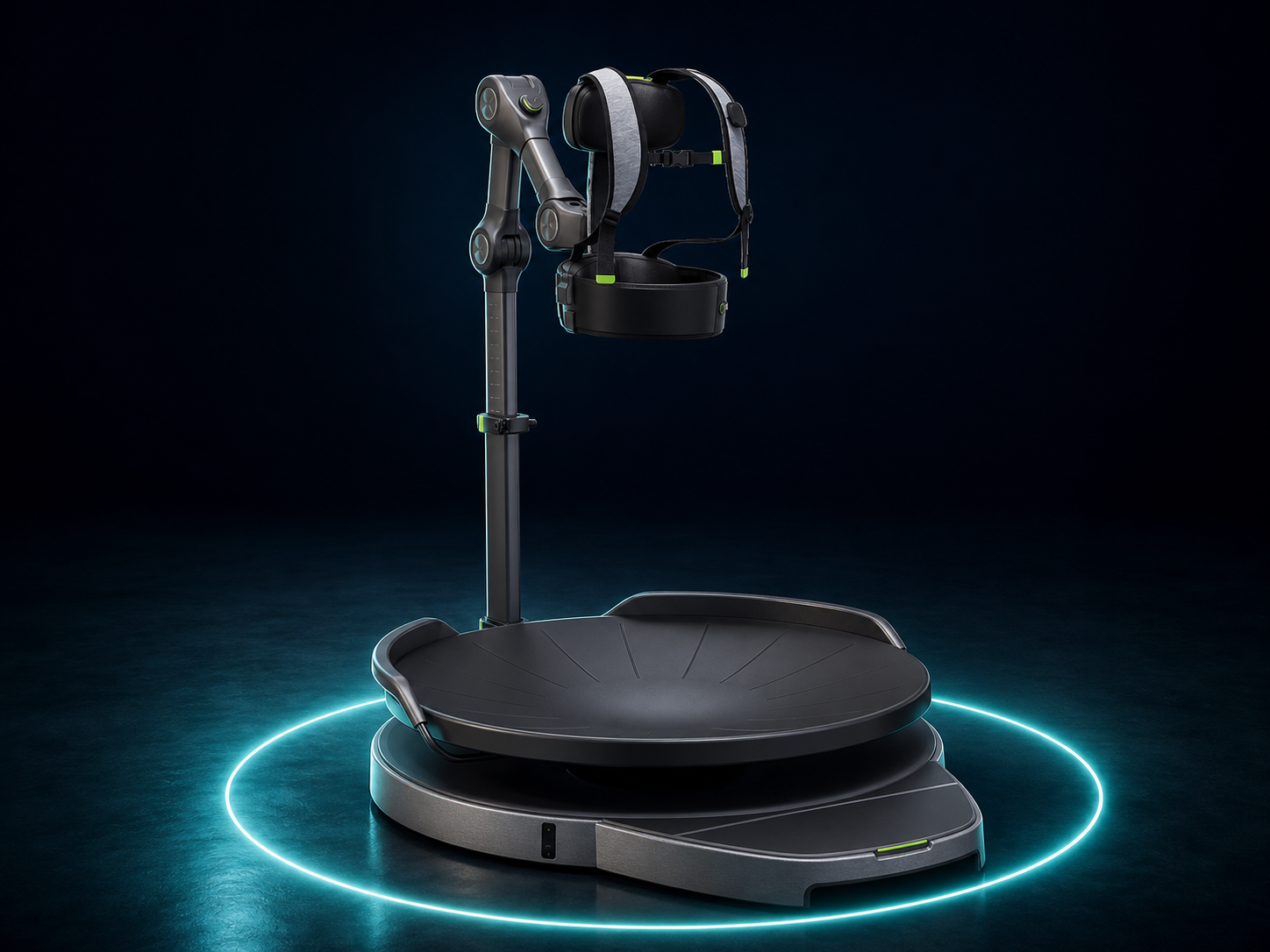
Omnidirectional treadmill — low concave dish with a vest harness connected to a rear support arm
OMNIDIRECTIONAL · 360°

The body becomes the input.

The user stands in a shallow concave dish and wears low-friction overshoes. A vest harness on a rear support arm holds them at the centre, so the walking motion goes nowhere while the virtual world moves around them. Sensors read stride, direction and pace and feed them to the scene as locomotion — turn, stop, slow down, back up. Nothing about the content has to change: any VR scene that accepts a walk input works, whether that is one of your own modules, a 3DGS scan of a real building, or a scenario we build. What changes is the person — they stop driving an avatar and start moving their own body. It installs into existing immersive spaces with no structural change, and lets peers observe every session live.

What the evidence actually says →
01

Step on

ABOUT A MINUTE

Harness on, low-friction overshoes on, with a staff member beside you.

02

Walk

ANY DIRECTION

At your own pace — turn, stop, change speed. Most people move naturally within a couple of minutes; real confidence usually takes two or three sessions.

03

Step off

NEXT PERSON

Harness released, harness and overshoes and headset wiped down, next trainee on.

Case Study · Built In-House

XR Nexus Fire Evacuation Training System

The treadmill's flagship deployment — walk the escape on your own feet, so emergency response becomes body memory.

3DGSOmnidirectional TreadmillVRFire Evacuation

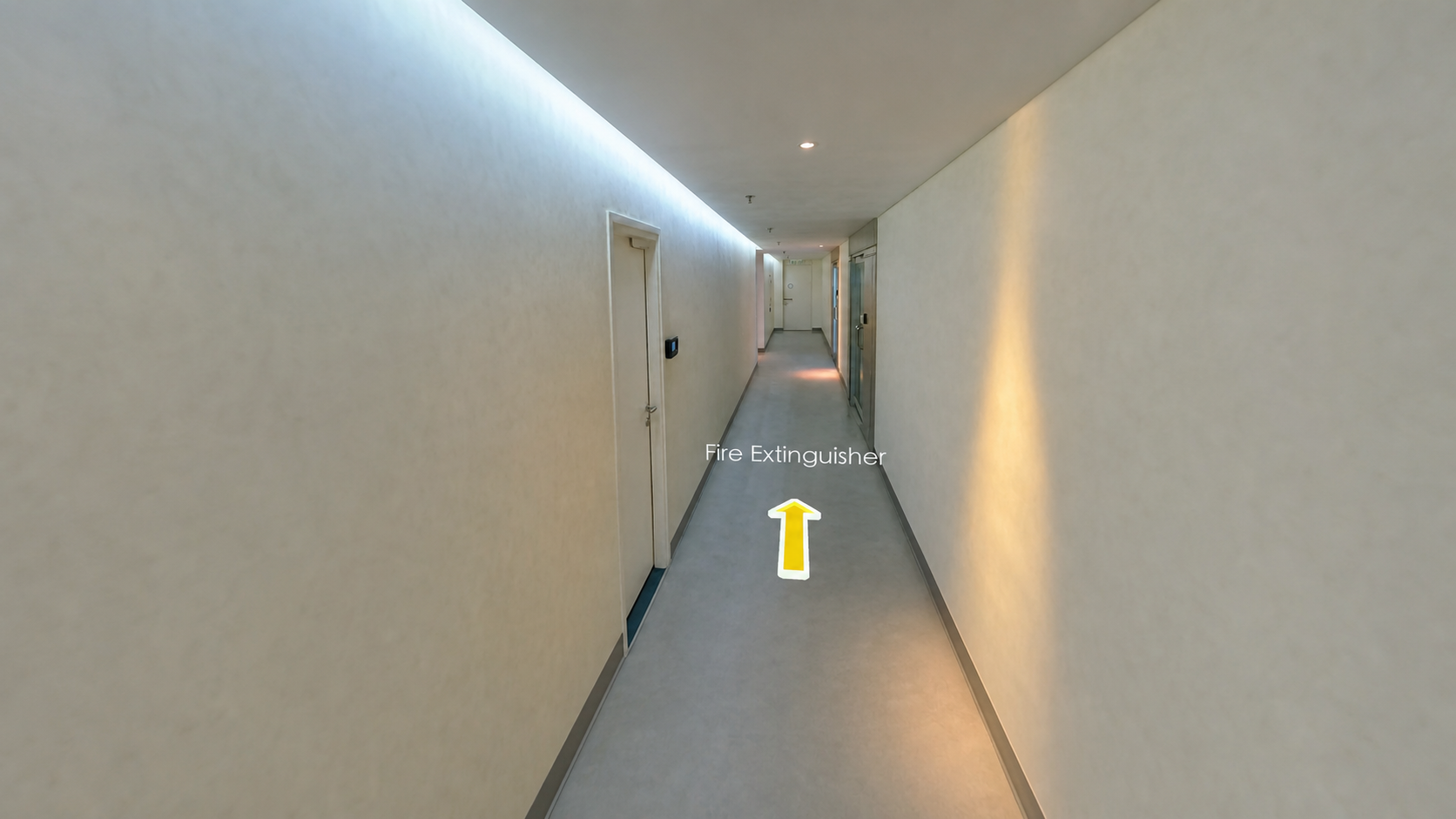
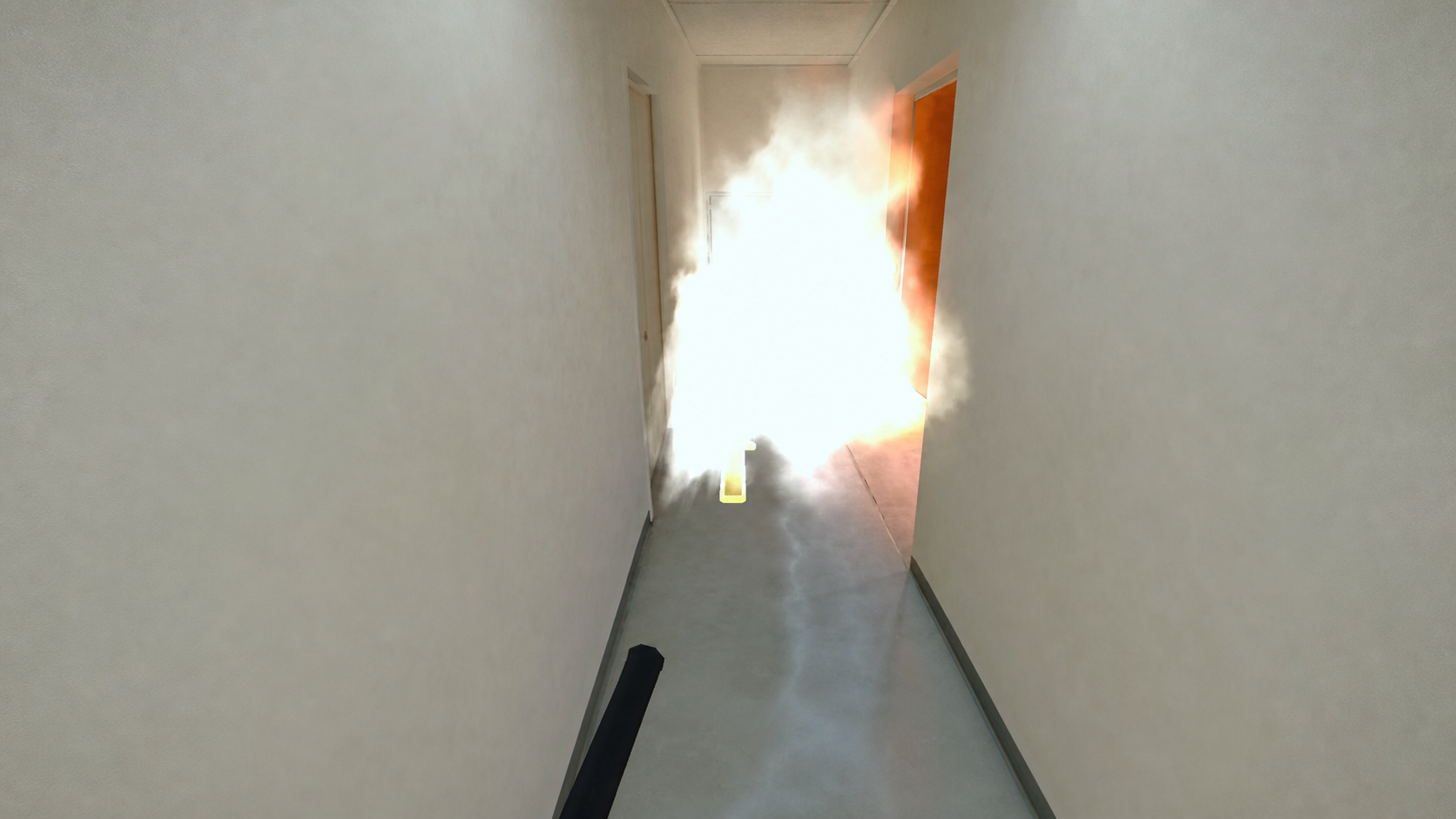
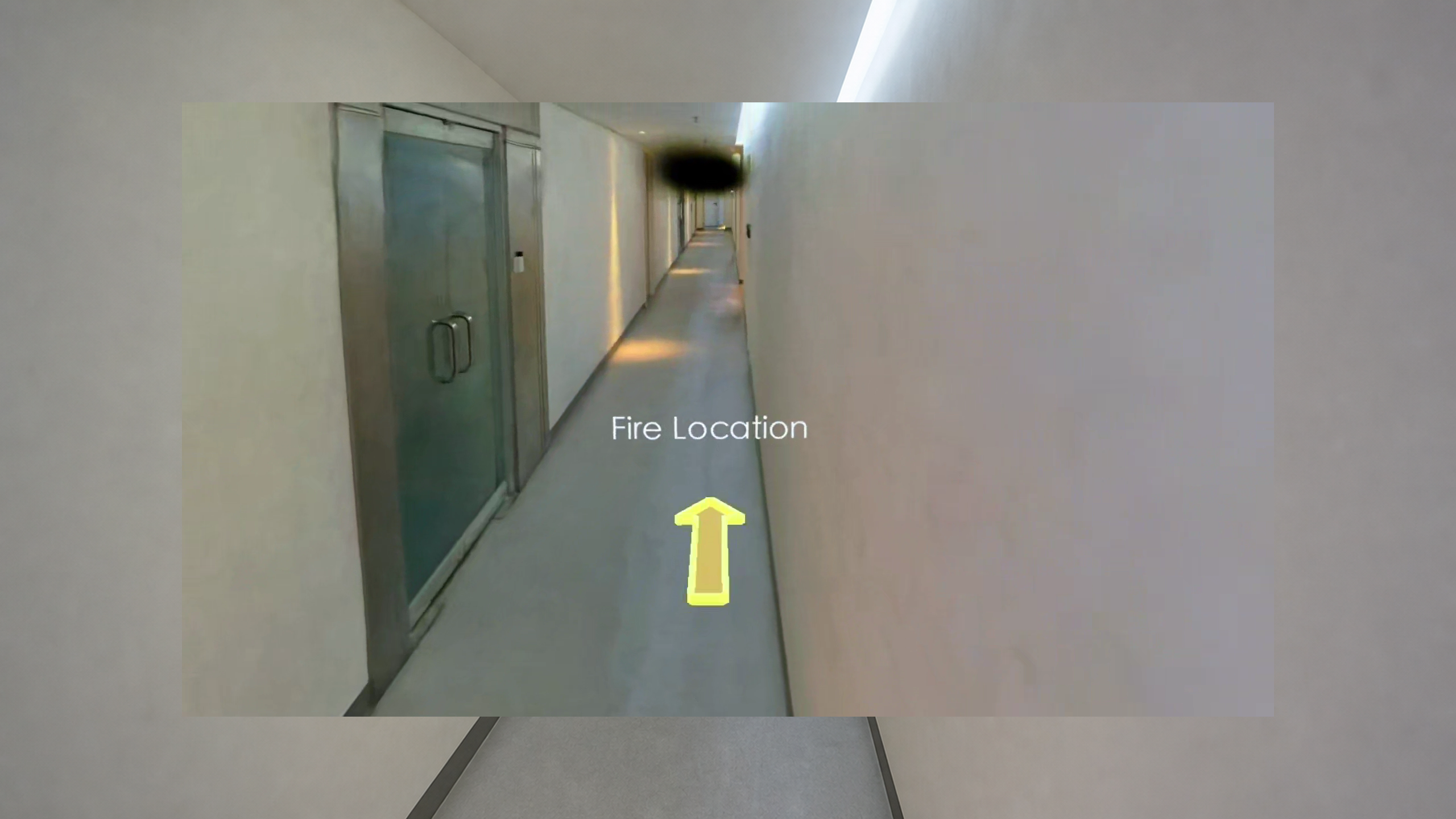
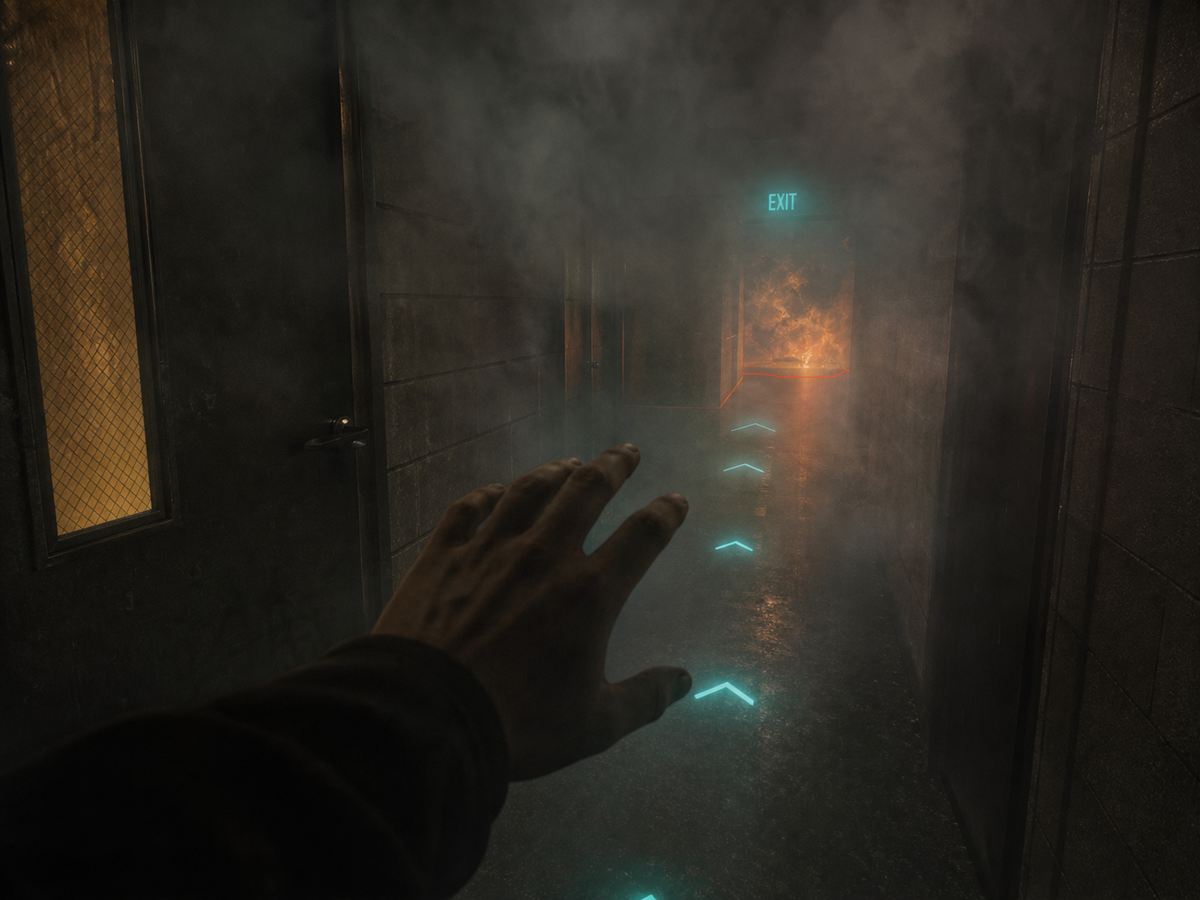
A handheld scanner captures a real building into a 1:1 digital twin. Trainees put on a VR headset and walk the smoke-filled evacuation route on the omnidirectional treadmill — locating the fire, choosing the right extinguisher, finding the way out. Zero-risk, repeatable, standardised.

See the full case study →
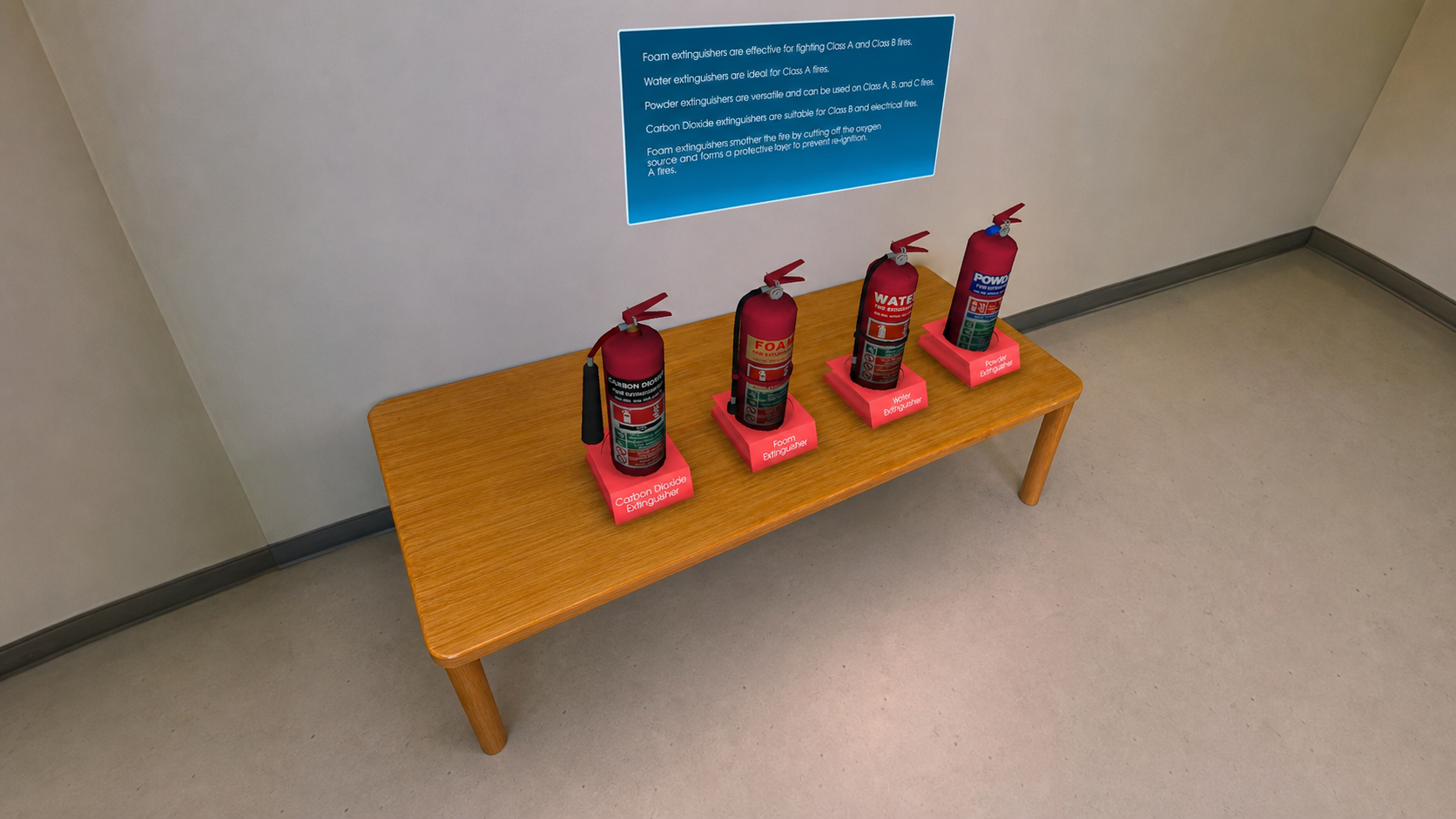
Environments

Five rooms this machine earns its floor space in

Organised by the space it lives in, not the industry it trains. ← swipe to explore →
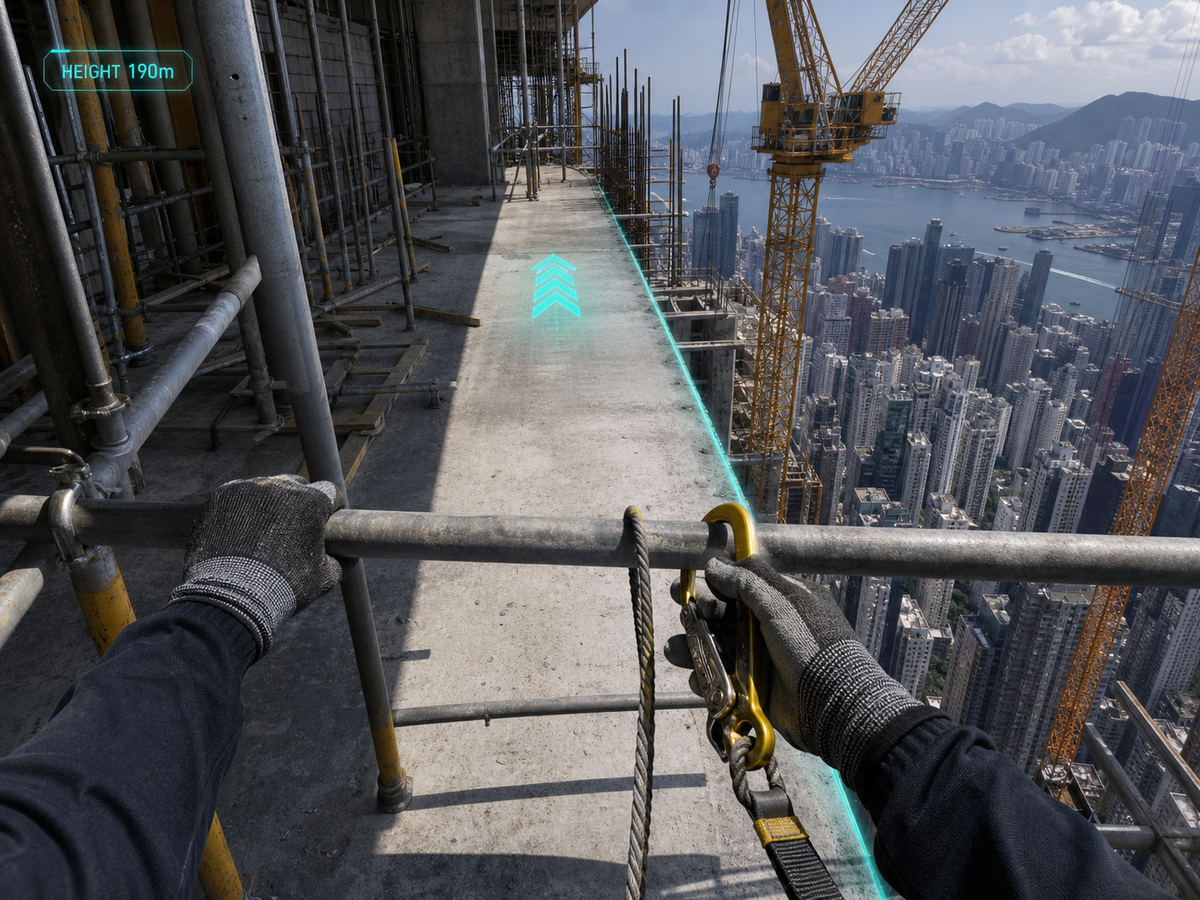
A safety training centre running a height-safety drill
Corporate · Training room

Corporate training room or safety training centre

Who it's for

Organisations that already run in-house training and want the drill to leave a physical memory instead of an attendance record.

Why the treadmill

Height, confined-space and evacuation drills only become instinct if the body did them. Walking is the difference between recognising a route and knowing it.

Construction Training Platform → Property Management Training Platform →
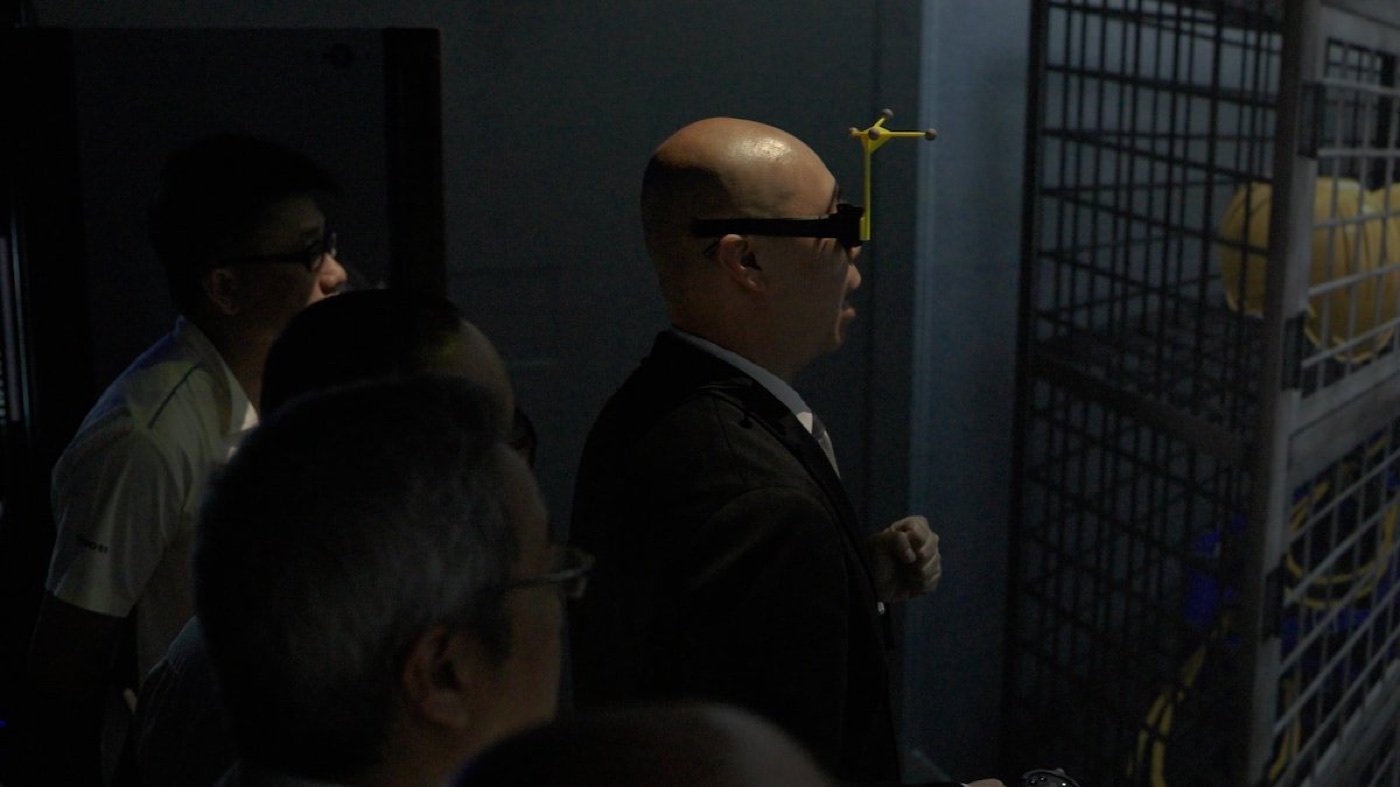
The VTM CAVE immersive safety training system at Sino Inno Lab
Innovation lab · Experience centre

Innovation lab and experience centre

Who it's for

Corporate innovation labs, technology demonstration centres and R&D showcases.

Why the treadmill

It is the exhibit that makes a visitor's body do something. VTM built the CAVE immersive safety training system at Sino Inno Lab, Sino Group's open innovation and technology demonstration centre — and a treadmill drops into a room like that with no structural work, turning a room people look at into a room people walk through.
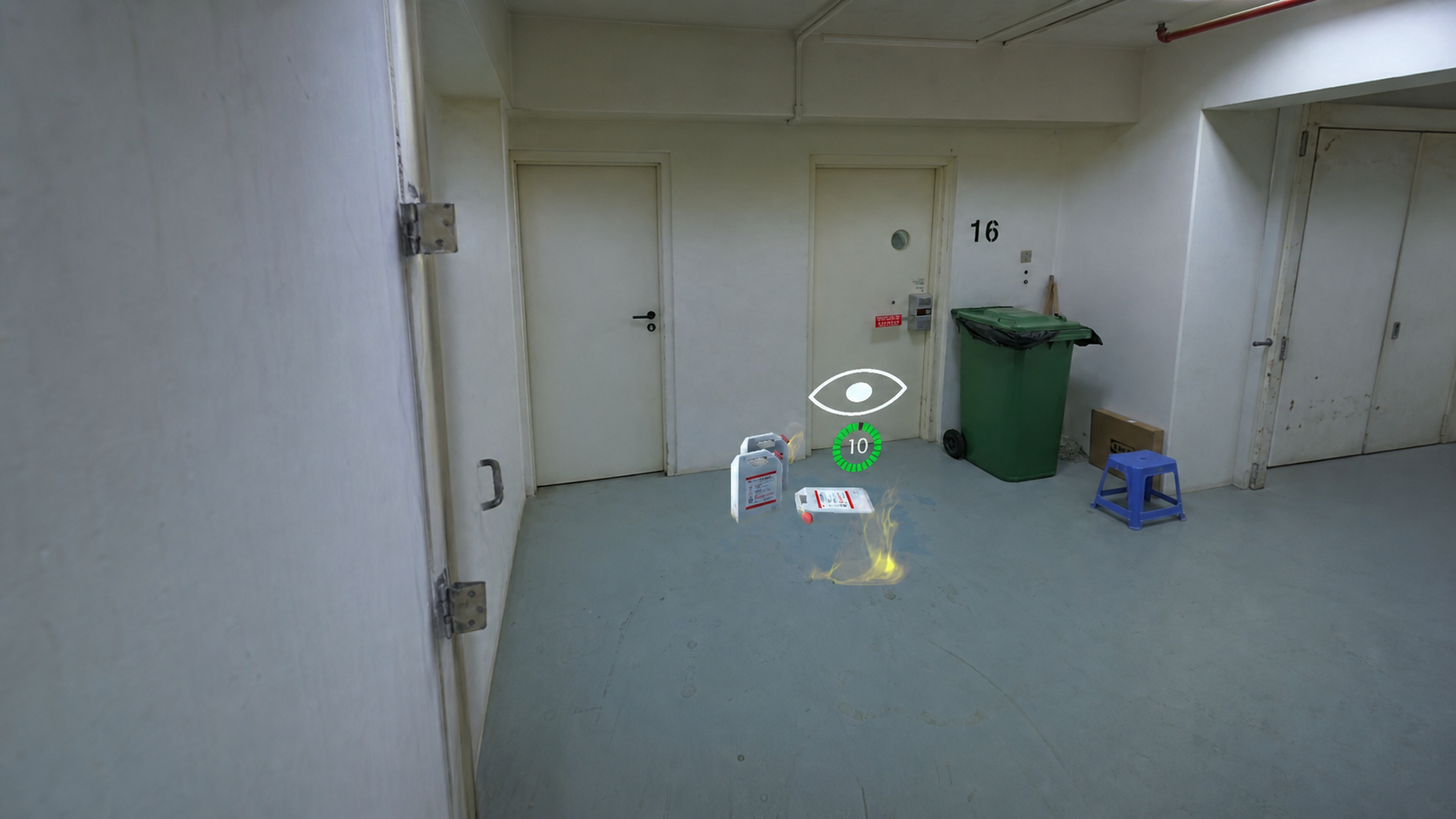
CAVE Projection → Sino Inno Lab case study →

The XR Nexus fire evacuation system demonstrated on an omnidirectional treadmill
Exhibition · Expo · Roadshow

Exhibition, expo and roadshow

Who it's for

Organisers and exhibitors who need a stand that draws and holds a crowd.

Why the treadmill

People queue for it. VTM first showed the XR Nexus fire evacuation system on a treadmill at OSH INNO EXPO; a person walking through smoke in front of your stand holds attention in a way no screen loop does. It is placed rather than built in, so it moves with the stand, and one staff member runs it — and you do not have to own one to put it on your stand, because we deploy short-term as well as sell.

Talk to us about your event →

A university research and teaching setting
University · Vocational campus

University and vocational campus

Who it's for

Research groups in spatial cognition, human factors, wayfinding and architecture; and VPET institutes training trades.

Why the treadmill

For this audience the treadmill is the variable under study, and there is a real published literature using these platforms for locomotion, turning, obstacle-circumvention and presence research. Note the honest limit: an omnidirectional platform is not the same as walking the real space — see the evidence section below. It is an apparatus for studying locomotion, not a substitute for ground truth. There is a Hong Kong precedent: a City University of Hong Kong team published a BIM-based multi-user VR treadmill system for architectural design review and collaboration (Applied Sciences, 2021), tested with practising architects.
XR Academy → See the research →

An evacuation drill walked inside a digital twin of a real building
Building operator · Drill room

The building operator's drill room

Who it's for

Property and facility managers, hotels, hospitals, campuses and malls who must run evacuation drills for staff who cannot all be taken off shift at once.

Why the treadmill

A real evacuation drill can be run once a year, in daylight, with nobody in danger and no smoke. On a treadmill inside a 1:1 scan of the actual building, it can be run every week, at night, in smoke, one person at a time, with a record of who did what.

Property Management Training Platform →

Evidence

Walking is not a nicer interface. It is a different result.

The claim we make is narrow and testable: people who move their own legs remember space better than people who sit and drive an avatar. Read the two figures below for what they are — a comparison of walking versus sitting, not a measurement of this machine. The third card is the limit that comes with it, and we would rather you saw it here than found it later.

85%of participants recalled space better on footIn 85% of participants, spatial-memory accuracy was higher when they moved through the real room on their own feet than when they navigated the same environment sitting at a desktop screen and keyboard (Cohen's d = 1.49, p < 0.001). The walking condition was real overground walking with a handheld AR tablet — not a treadmill.J. Neural Engineering, 2025
≈2×sharper location recall on footObject-location accuracy while walking was about twice that of the seated desktop condition (mean error 1.18 m vs 2.19 m). Same study, same caveat: this measures walking against sitting, and is the reason we put people on their feet at all.J. Neural Engineering, 2025
Not the sameA platform is not real walkingMeasured head-to-head against natural walking, participants on an omnidirectional platform overestimated distances and made larger angular errors in path integration. So we do not claim the treadmill reproduces real walking or gives more valid spatial data than walking the actual space — it gets the body moving inside a space you cannot otherwise walk.ACM Symposium on Applied Perception, 2024
80,000+Proven resultsParent platform CTP has trained 80,000+ workers across 80+ public projects, with site incidents ↓83%.VTM Digital
Field Deployment

"The Japan esports Union (JeSU) introduced a VR omnidirectional treadmill at Kiryu No.1 High School for fire evacuation drills — 18 students wore VR headsets and escaped a simulated smoke-filled fire on their own feet. The vice-principal: 'It felt so real — a real disaster can't be rehearsed in advance, so this is genuinely useful.'"

Academic Evidence

"Headset-only fire evacuation training needs a spotter throughout, limits the field of view, and demands a large physical set; adding a VR omnidirectional treadmill lets trainees genuinely walk and run on their own feet — safer, more immersive, removing the need to build a physical set."

PROVEN

"Virtuix (NASDAQ: VTIX) partnered with the University of Central Florida's Institute for Simulation & Training to steer a humanoid robot in real time via an Omni One treadmill — inside a CAVE projection system, with no head-mounted display."

Compare

Four ways to move in VR

If your virtual space is bigger than your real room and the route matters, the treadmill is the only option that gives you both. If either of those is not true, one of the other three is cheaper and simpler — and we will tell you so.

Omnidirectional treadmill
Thumbstick / teleport
Room-scale walking
Physical mock-up set
Space needed
About the size of the machine, plus room to step on and off
None
The size of the virtual space
A whole room or yard, built
Distance you can cover
Unlimited
Unlimited
Only as far as the room
Only what you built
Motion sickness
Real, and measured — a slip-style platform has its own cybersickness profile. See the FAQ
Highest
Lowest
None
Builds body memory of a route
Yes
No
Yes
Yes
Cost to change the scenario
Software only
Software only
Software only
Rebuild it
People at once
One per unit — units can be networked
Many
Many
Many
Learning curve
Natural within minutes; confident by the second or third session
Minutes
None
None
Specification

What it needs from your building

Two ways to have one. We offer short-term deployment — for an event, an expo, a roadshow or a trial period — and we also supply units for purchase with permanent installation. Tell us which you are after and we will scope it that way; the checklist below applies either way, only the depth of the survey changes.

These are the questions every buyer asks on the second call. We do not publish a spec sheet here, because the numbers that matter — footprint, clearance, floor loading, user limits — belong to the specific unit we specify for you, and a number you plan a building around should come from a site survey, not a web page. Here is exactly what we establish, and what you should have ready.

01
Footprint and clear working areaThe unit's own footprint plus the clear space around it for the operator and for stepping on and off. We measure this against your room, not against a brochure.
02
Ceiling clearanceUnit height including the rear support arm, plus your tallest user with arms raised. Confirmed on site — no vendor publishes a figure you can safely plan from.
03
Floor and loadingLevel, solid floor. Unit plus user is a concentrated load. In a mall, an office or on a raised-access floor this needs a structural sign-off, not a guess — and we will not quote you a number without one.
04
Power and servicesStandard mains socket. No plumbing, no compressed air, no structural work — it is placed, not built in, and drops into an existing CAVE room without alteration.
05
User height and weight limitsEvery model has a published range at both ends. We give you the exact range for the unit we specify, so you know before you commit who on your team can and cannot use it.
06
Footwear — plan for a shoe librarySpecial low-friction overshoes are mandatory, in a range of sizes, sanitised between users. That is a shoe library, not an accessory. Plan for it, especially if your trainees wear safety boots.
07
Throughput and staffingOne person walks at a time, and training use needs a trained operator present. We size the real cycle time — briefing, fitting, scenario, changeover — against your headcount and the hours you have, before you commit.
08
Hygiene protocolHarness, overshoes and headset are wiped down between people. No vendor publishes a sanitisation protocol — this one is yours to own, and we will help you write it.
09
ContentYour own modules, a 3DGS scan of your building, or a scenario we build. Any scene that accepts a walking input will run.

The fastest way through all of this is to walk on one first. Fifteen minutes tells you more than a survey will.

Book a live demo →

Limits

Where a treadmill is the wrong answer

We would rather lose the order than sell you the wrong room.

01
It is not a medical or rehabilitation deviceClinical gait retraining uses a different class of equipment — body-weight-support treadmills and instrumented walkways. Do not specify this for patient therapy.
02
It is not a fitness machine, and we do not sell it as oneThe low-friction surface is designed to let the body simulate walking in place, not to load it for exercise or conditioning. It is worth knowing that measured exercise intensity on this class of device is genuinely high — around 7.3 METs, vigorous, against 2.1 METs for controller play (Applied Sciences, 2025). We treat that as an operating limit rather than a selling point: sessions are self-limiting, older or less fit trainees will tire, and you should not schedule an hour on it.
03
Walking and a light jog are the honest rangeHow much faster you can go depends on the unit. We confirm it for the model we specify — do not promise your trainees a run before we have.
04
It is not accessible to every userIt requires standing and walking unaided. Wheelchair users and people with balance, cardiac or mobility conditions should be routed to headset-only or CAVE training instead — both of which we also supply.
05
One person walks per unitUnits can be networked so a team drills together in the same virtual space, but that is more machines and more floor. To train fifty people in an afternoon on one unit, pair it with a CAVE so the group watches and rotates.
06
It has a height floor that excludes childrenIf you are training primary-school pupils, this is the wrong device — use a headset or a CAVE.
07
If your scenario has no movement in it, you do not need oneA control panel, a console, a conversation — use a headset.

What we do not currently supply — and will say so plainly. On published evidence the two strongest commercial applications of this hardware are high-intensity fitness and location-based entertainment — VR arcades, esports venues and paid attractions, where operator economics are well documented overseas. VTM does not offer a fitness product, an arcade product or an LBE content library, and we have no operator references, so you will not find either on this page dressed up as something we do. If that is your use case, talk to us anyway — we would rather point you somewhere useful than sell you a training platform for an entertainment problem. What we do supply is training, simulation and demonstration: the five rooms above.

FAQ

Frequently Asked Questions

What is an omnidirectional treadmill?+
A locomotion platform that lets a person walk and turn in any direction on the spot inside a virtual environment. A shallow low-friction dish plus a vest harness on a rear support arm keeps them in place while their stride is read as movement in the scene, so they navigate on their own feet instead of with a hand controller.
Do I need a VR headset to use it?+
No. It works with a headset, and it also works headset-free inside a CAVE projection room, where the scene is projected on the walls around the user.
How much space does it need, and does my floor need work?+
It needs the unit's own footprint plus a clear working area around it for the operator and for stepping on and off. There is no structural alteration — it is placed, not built in, and installs into an existing CAVE space as it stands. We confirm the exact footprint, ceiling clearance and floor loading for the specific model in a site survey rather than publishing a number you might plan a building around.
Who can and cannot use it?+
Anyone who can stand and walk unaided, within the model's height and weight range, wearing the harness and overshoes. It is not suitable for wheelchair users or for people with balance, cardiac or mobility conditions — for those trainees we run the same scenario headset-only or in a CAVE. There is also a height floor that excludes children.
Can it be used for physiotherapy or gait rehabilitation?+
No. It is a training and simulation device, not a medical one. Clinical gait retraining uses body-weight-support treadmills and instrumented walkways designed for that purpose, and the walking pattern on a slip-style platform differs from overground walking — which is the opposite of what gait retraining needs.
Is it a fitness machine, or can I run a VR arcade with it?+
Neither is something VTM supplies. Exercise intensity on this class of device is genuinely high — around 7.3 METs against 2.1 for controller play (Applied Sciences, 2025) — and location-based entertainment is a real business overseas. But we have no fitness product, no arcade content library and no venue-operator references, so we will not sell you one. We supply training, simulation and demonstration. If entertainment or fitness is your use case, talk to us and we will tell you honestly whether we can help.
How many people can I train in a day?+
One person walks at a time, and training use needs a trained operator present throughout. A full drill runs a handful of people per hour once you count briefing, fitting the harness and changeover; a short demo at an expo runs many more. Pairing the unit with a CAVE lets a whole group observe and rotate through, and units can be networked so a team drills together.
Does it make people motion sick?+
Some people, yes — and we would rather tell you now than on the day. Walking removes the eye-versus-body mismatch that thumbstick movement creates, but a slip-surface platform introduces its own. A study of 46 first-time users measured higher cybersickness on a slip-style omnidirectional treadmill than on a friction-based unidirectional one (p=.003), with more nausea and less postural stability (International Journal of Human-Computer Studies, 2023), and longer walks make it worse. So we keep first sessions short, build up over two or three visits, and an operator stays beside the user throughout.
Does it reproduce real walking?+
Not exactly, and we will not claim it does. Measured head-to-head against natural walking, participants on an omnidirectional platform overestimated distances and made larger angular errors in path integration (ACM Symposium on Applied Perception, 2024). What it does is get the body moving through a space you could not otherwise walk — a burning building, a live worksite, a floor you do not yet have access to. For research where the real-world measurement is the point, it is an apparatus for studying locomotion, not a substitute for ground truth.
Can I run my own content on it?+
Yes. Any scene that accepts a walking input. We also build scenarios, and we can scan your actual building into a 1:1 digital twin with 3DGS so the route people walk is the real one.
Can I rent one for an event, or do I have to buy it?+
Either. We offer short-term deployment for events, expos, roadshows and trial periods, and we also supply units for purchase with permanent installation. Which route suits you depends on how often you will run it and whether it needs a room of its own — tell us the use case and we will say which one we would put you on. Talk to us for terms and availability.
Can I try one before I commit?+
Yes — book a 15-minute live demo and walk on it, whether you are looking at a short-term deployment or a purchase. Call +852 3590 3127 or email info@vtmdigital.com.

Walk on it before you decide.

Fifteen minutes, on your feet. It is the only way to tell whether walking changes anything for your training — and it does not survive being described.

Book a live demo →
✉ info@vtmdigital.com · 📞 +852 3590 3127