
EMSD High-Risk Operations Compliance in Practice: How Hong Kong Property Management E&M Technicians Meet Lift, Chiller, and Fire Pump Regulations Through PMTP VR Training
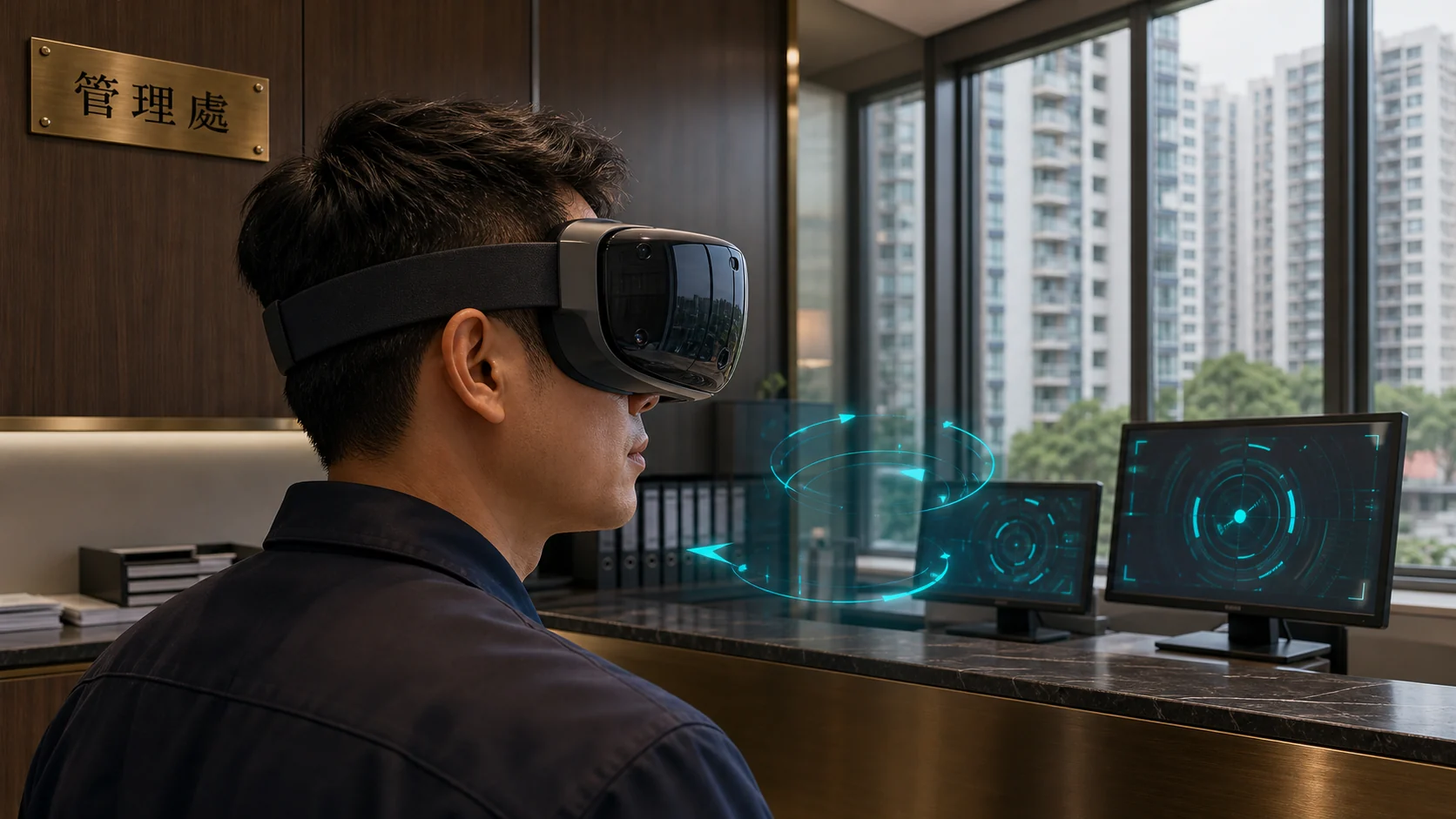
VTM Digital’s Property Management Training Platform (PMTP) enables Hong Kong property management E&M technicians to practise high-risk operations — lift machine room emergency procedures, HVAC chiller fault diagnosis, and fire pump activation sequences — in a VR environment, building genuine operational proficiency without touching live equipment. Aligned with the regulatory framework overseen by the Electrical and Mechanical Services Department (EMSD) under the Lifts and Escalators Ordinance (Cap. 618) and employer training obligations under the Occupational Safety and Health Ordinance, PMTP generates documented training completion records that help property management companies build an auditable compliance trail.
In short, PMTP is a systematic VR training solution for property management E&M equipment in Hong Kong — giving property management companies an EMSD-grounded, auditable compliance record before technicians tackle high-risk operations in the field.
Emergency shutdown procedures in a lift machine room, refrigerant leak response on a chiller system, annual test activation of a fire pump — these three operations share a common challenge: the cost of getting them wrong is extremely high, yet traditional training is structurally weakest at exactly these points. The problem property management companies face is not a lack of awareness that training is needed. It is this: the operating environment for high-risk equipment does not allow new technicians to make repeated mistakes on real systems; yet classroom-based procedural instruction cannot build the genuine operational reflexes technicians need under pressure. VR training fills precisely that gap.
EMSD Regulatory Requirements at a Glance: Key Training Obligations for Property Management E&M Technicians
Training responsibilities for Hong Kong property management companies in the area of E&M equipment arise from multiple regulatory frameworks (source: Electrical and Mechanical Services Department (EMSD) emsd.gov.hk):
| Equipment Category | Primary Applicable Regulation | Core Training Obligation |
|---|---|---|
| Lifts & Escalators | Lifts and Escalators Ordinance (Cap. 618) | Routine maintenance and periodic inspections must be carried out by a registered lift contractor; property management companies must ensure in-house technicians are conversant with emergency operating procedures, escalation protocols, and immediate response responsibilities in fault situations |
| Chillers / Large HVAC Equipment | EMSD Building Services Maintenance Guidelines + owners’ corporation obligations | Periodic maintenance must be performed by qualified technicians; property management companies must ensure technicians possess fundamental knowledge of refrigeration systems and are trained in emergency response procedures and PPE use for refrigerant leak scenarios |
| Fire Pumps & Fire Services Installations | Code of Practice for Minimum Fire Service Installations and Equipment (MFSI Code) | All fire service installations (including fire pumps) must be tested and maintained periodically; property management companies bear a statutory obligation to ensure fire systems remain fully operational and that periodic tests and records are carried out by competent personnel |
VR Training Scenarios vs High-Risk Operations: How PMTP Covers E&M Compliance Scenarios
| High-Risk Operation Scenario | How PMTP VR Training Intervenes | Limitations of Traditional Training |
|---|---|---|
| Lift Machine Room Emergency Shutdown | Technicians practise the location of emergency stop buttons, shutdown sequences, and post-incident reporting workflows in a VR machine room environment — repeatedly and safely, across multiple fault scenarios | Real lifts cannot be taken through emergency shutdown drills during normal operating hours; taking a lift out of service directly disrupts building operations and residents |
| HVAC Chiller Fault Diagnosis | Technicians identify fault indicators and work through procedures step by step in a virtual plant room — including PPE donning and emergency response procedures for refrigerant leak scenarios | Chillers are large and inherently hazardous; allowing inexperienced technicians to operate them directly risks equipment damage and personal safety incidents that are simply not acceptable |
| Fire Pump Activation & Annual Test Procedures | Technicians practise fire pump control panel operation, system start-up confirmation procedures, and test record completion in the VR environment | Fire pump tests require specific conditions and occur at limited frequency (typically once per year), making them unsuitable as a regular means of building operational proficiency |
| Electrical Equipment Isolation (Lockout/Tagout) | Technicians practise safe isolation procedures near high-voltage electrical equipment; the VR environment allows error attempts with zero real-world risk | Any procedural error in a live high-voltage environment carries serious safety consequences — trial and error on real systems is simply not permitted |
For a full module design on lift machine room emergency response training and the implementation steps for property management companies, see: Property Management Emergency Response VR Training.
Compared with Traditional Classroom Training
Traditional E&M training typically combines theory-based classroom instruction with occasional on-site observation. This approach is effective for conveying regulatory knowledge, but it has several structural limitations when it comes to building genuine operational capability.
| Training Dimension | Traditional On-Site / Classroom Training | PMTP VR Training |
|---|---|---|
| Safety | Requires equipment shutdown or heavily supervised access; risk of equipment damage or personal safety incidents | Fully virtual environment — technicians can make mistakes freely with no risk to real equipment or personnel |
| Repetition Opportunities | Equipment access time is limited; the hands-on opportunities each technician receives are unequal | On-demand repetition — each technician independently completes the full operational workflow as many times as needed |
| Training Record Completeness | Relies on supervisor manual records; completeness depends on the individual | System automatically records completion status, operation time, and module version; full training reports can be exported |
| Scenario Coverage | Limited to the current equipment model and normal operating scenarios; difficult to simulate rare faults | Covers multiple equipment types and fault scenarios — including low-frequency, high-risk emergency situations |
| Cross-Property Consistency | Technicians trained at different properties; degree of standardisation varies | Unified curriculum ensures technicians across all properties in the portfolio receive the same content and standard |
This comparison does not suggest that traditional training has no value — classroom instruction in regulatory knowledge and on-site observation remain necessary. The greatest supplementary value VR training provides is ensuring that technicians have already “done it” enough times before they face the real thing.
Case Study: Nan Fung’s Cross-Property Deployment at Scale
Nan Fung Group is the most representative large-scale PMTP deployment case in Hong Kong’s property management sector.
Nan Fung PMTP deployment
Nan Fung PMTP deployment
Nan Fung PMTP deployment
Nan Fung PMTP deployment
The management significance behind these numbers matters more than the headline figures. For large property management companies overseeing a multi-property portfolio, the hardest problem is not “training technicians well at one property” — it is “ensuring frontline technicians across all 80 properties have received training of the same standard, with a documented record.” The Nan Fung case demonstrates that PMTP can serve as a management tool for standardising training across properties: completion records can be consolidated across the entire portfolio, giving management real-time visibility into training coverage across all sites.
→ Full case study: PMTP Platform — Full Overview & Case Studies
Labour Department OSH Obligations: Employers’ Statutory Training Responsibilities
Beyond the EMSD equipment regulatory framework, Hong Kong’s Occupational Safety and Health Ordinance (source: Labour Department labour.gov.hk) also imposes proactive training responsibilities on property management companies as employers:
- Employers must ensure employees receive adequate safety training and work instructions before performing hazardous work
- The burden of demonstrating “adequate training” lies with the employer: in the event of a workplace injury, training records are critical compliance evidence
- High-risk E&M trades (high-voltage electrical work, pressure vessels, confined space entry) all fall within the Occupational Safety and Health Ordinance’s priority monitoring scope
- The Labour Department may require employers to produce training records during inspections; verbal explanations are generally insufficient as valid evidence
Recognised credentials: PMTP holds Smart Lab S0644 accreditation (a technical review of training solutions by the Hong Kong Productivity Council) and has passed government procurement validation (PA24-072), making it applicable to property management projects where training performance must be reported to government or public bodies.
Frequently Asked Questions: What E&M Training Managers and Property Management Companies Ask Most
The fundamental challenge in property management E&M training has never been whether technicians know the procedure. It is whether, under pressure, they have performed it enough times to execute it without thinking. VR training provides exactly what traditional training systems structurally lack: sufficient repetition.
Find out how PMTP can build a documented, auditable compliance training system for your E&M technician team
Explore PMTPFurther Reading
- VTM Digital PMTP — Property Management Training Platform: Full Overview
- Complete Guide to VR Training for Hong Kong Property Management Companies: PMSA Licensing, Smart Lab S0644 Accreditation & PMTP ROI (2026)
- Property Management Group VR Training Standardisation | VTM PMTP
- How Mixed Reality (MR) Training Helps Hong Kong Companies Achieve OSH Compliance: Regulatory Mapping × Risk Management ROI × Implementation Roadmap
- VR Mental Health Training in Hong Kong: Where PMTP Fits in OSH Psychosocial Risk | VTM
- How Hong Kong’s Property Management VR Training Is Solving Europe’s Facility Management Crisis
Sources
- Electrical and Mechanical Services Department (EMSD) emsd.gov.hk — Lifts and Escalators Ordinance (Cap. 618), Building Services Maintenance Guidelines
- Hong Kong Labour Department labour.gov.hk — Occupational Safety and Health Ordinance: employer training obligations


