
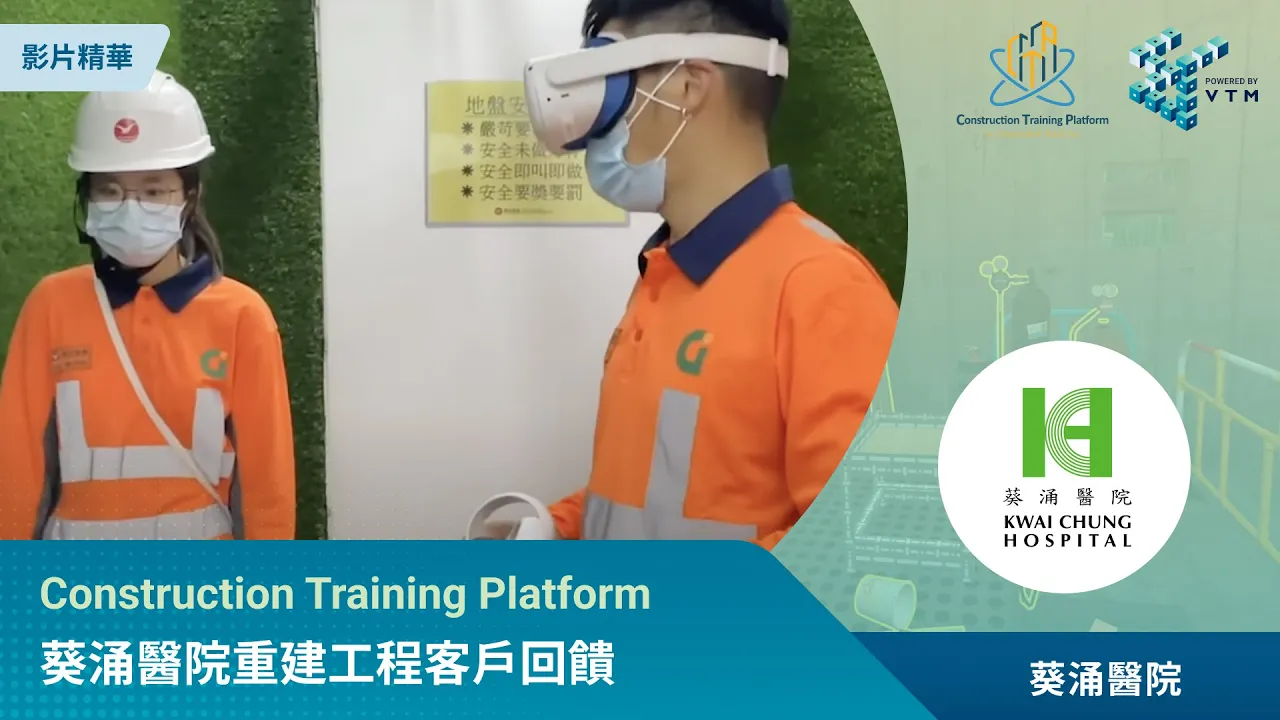
VR training in Hong Kong has moved from experimental to essential — this guide explains exactly how to implement it, what it costs, and what results you can expect. Here is what enterprise training managers need to know.
Revolutionary Advantages of Immersive XR Training
Compared to conventional approaches, the XR education platform (XR Education Platform) enables workers to enter virtual sites from a first-person view, experiencing scenarios like high-altitude falls or mechanical mishaps, creating impressions far beyond verbal descriptions. This not only heightens safety awareness but also reduces real-world incidents, ideal for Hong Kong’s dense urban settings.
VR Technology Applications in Safety Training
The core of immersive XR training lies in its high-fidelity simulations. Workers equip VR headsets to clearly view required gear, regulatory demands, and environmental details, as if on-site. For example, in high-altitude simulations, workers must follow instructions for safety checks, or “experience” the consequences of oversight; in escape drills, crouching and covering the mouth is needed to exit virtual fires. This is more intuitive than traditional video training, clarifying crisis responses. VTM CTP integrates these features, proven in multiple Hong Kong projects, significantly strengthening response capabilities.
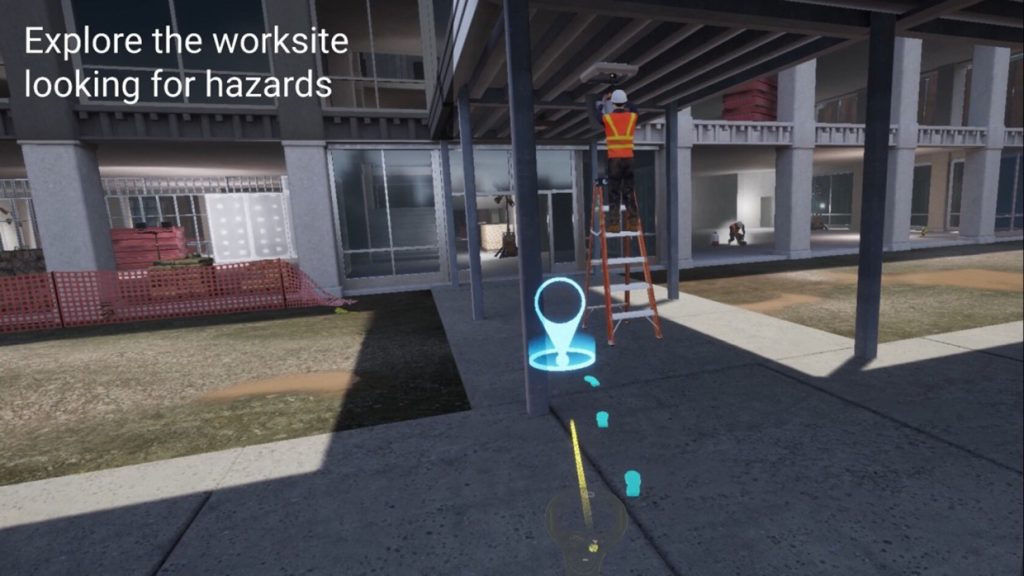
First-Person Perspective Simulating Real Risks
VR technology’s application in safety training is rapidly gaining traction. Traditional methods can be dull, leading to forgetfulness, while XR training 2025 (XR Training 2025) trends emphasize gamification and interactivity, making learning engaging. Through first-person perspectives, workers feel the heart-pounding tension of real sites, deepening understanding of potential risks. For instance, simulating heavy machinery collisions or electrical shocks teaches proper operations, avoiding negligence. This extends beyond construction to property management, like patrols or fire suppression, aiding firms in achieving zero-accident goals.
XR Training vs Traditional Lecture Methods
Compared to traditional lecture methods, XR training’s superiority is undeniable. Conventional training relies on text or speech, with low engagement and fleeting memory; XR simulates real scenarios via VR hazard training, fostering active participation and intuitive knowledge mastery. Studies show this boosts safety knowledge retention by over 40%, especially for younger workers. VTM CTP supports AI in VR training (AI in VR Training), automatically recording performances and analyzing weaknesses for personalized courses. In the context of Hong Kong education future (Hong Kong Education Future), this tech is expanding from workplaces to schools, nurturing next-generation safety mindsets.
Worker Feedback and Interactive Learning Benefits
Worker feedback is consistently positive, noting VR’s strong realism and high fun factor, far more appealing than mere explanations. One user shared: “XR lets me truly experience risks—now I’m more cautious at work.” This interactivity not only boosts engagement but also helps internalize safety knowledge for real-scenario application. By simulating authentic scenes, workers preemptively identify hazards, like gear inspection oversights or environmental shifts, elevating overall safety levels. VTM’s platform is user-friendly, with one-click operations for team training, fitting busy Hong Kong sites.
Potential of XR Learning Trends 2025 in Hong Kong
Looking to 2025, XR learning trends 2025 (XR Learning Trends 2025) will dominate safety education. With the rise of AI meets XR education dialogue (AI Meets XR Education Dialogue), VTM CTP can incorporate more elements, like metaverse simulations or environmental topic training, driving Hong Kong construction’s digital transformation. This isn’t just a tool—it’s an innovation trend, positioning enterprises ahead. For teams seeking efficient safety, this is indispensable.
If you’re eager to experience this revolutionary training, VTM’s XR education platform is the top choice. Contact us for a demo and discover how digital education XR (Digital Education XR) can elevate your team.
Internal link: VTM CTP Solutions.
The Honest Case for Immersive XR Training: What It Does and What It Doesn’t
Immersive training technology gets oversold. The claim that XR replaces all other training formats is wrong, and experienced safety officers know it. What XR does — specifically, what VTM CTP does — is close a gap that no other single training format can close: the gap between knowing a safety procedure and being able to execute it correctly under pressure.
Traditional induction tells a worker about fall arrest inspection. A video demonstrates it. XR makes the worker inspect the harness themselves — in a simulated environment where a missed check leads to a simulated fall, not a real one. The procedural memory that creates is not something a better PowerPoint deck can achieve. This is the precise boundary of XR’s advantage: behavioural conditioning for high-stakes, low-frequency events.
How VTM CTP Works in Practice: Beyond the Marketing Language
The realistic picture of a VTM CTP deployment on a Hong Kong construction site looks like this:
Workers arrive at an onsite training station before their first day on the active site. They complete 2–3 simulation modules relevant to that day’s assigned work — working at heights if scaffolding work is planned, confined space protocols if drainage access is on the schedule. The session takes 20–40 minutes. Completion is logged automatically in the central platform, satisfying the documentation requirements of 勞工處 inspection.
Over the course of a project, the same worker may complete 6–8 modules — a rolling training programme that reinforces safety behaviours as site conditions change. This is fundamentally different from a single induction at project start that is meant to cover every hazard the worker might encounter over a 12-month engagement.
VR vs Traditional vs Hybrid: Where Each Approach Makes Sense
The right answer for most large contractors is not “replace everything with XR.” It is a structured hybrid model where each format does what it does best:
Statutory compliance documentation — handled through existing induction administration. XR does not replace this; it supplements it.
Hazard-specific behavioural conditioning — handled through XR simulation. This is where CTP operates and where its impact on incident rates is concentrated.
Site-specific operational briefings — handled through toolbox talks and supervisor instruction on the active site. XR cannot replace real-time, context-specific instruction.
The 83% incident reduction VTM observes across deployments comes from adding XR to a functioning safety system — not from replacing that system.
What Is VTM CTP? A Plain-Language Definition
VTM CTP (Construction Training Platform) is a virtual reality safety training system built specifically for Hong Kong’s construction industry. Workers wear a VR headset and enter a simulated construction site where they practise responses to real hazards — height falls, confined space entry, PPE procedures — without physical risk. The platform is pre-approved under Hong Kong’s CITF grant scheme (approval code PA24-072), meaning employers can claim up to 50% of deployment costs through government funding.
How the CTP Platform Works: Three-Stage Deployment
Stage 1 — Assessment: VTM’s team analyses the site’s specific risk profile and selects the relevant modules from the CTP library of 37+ scenarios. Stage 2 — Training: Workers complete 60-90 minute immersive sessions. The system tracks every decision, response time and mistake, generating a performance score automatically. Stage 3 — Compliance: Training records are exported directly to the formats accepted by the Construction Industry Council (CIC), satisfying Labour Department reporting requirements without additional paperwork.
Want to see what a realistic CTP deployment looks like for your site? We offer a live demonstration at your offices or site — no sales presentation, just the platform in action.
Further Reading
- VR Training Analytics and LMS Integration: How to Measure Safety Training ROI in 2026
- VR vs Traditional Safety Training ROI: The Hong Kong Enterprise Decision Guide (2026)
- The Proven Benefits of Immersive VR Safety Training: ROI, Retention & Real-World Results
- XR Workplace Training: The Proven Benefits of Immersive Safety Training for Frontline Workers


