In the complex world of water management, ensuring safety in sewage treatment and drainage systems is paramount. Traditional training methods, with only 20% knowledge retention, often fail to equip workers for high-risk tasks.
Singapore’s PUB (Public Utilities Board) is leading the charge with cutting-edge VR training, leveraging virtual reality to deliver immersive, effective solutions. By achieving up to 70% knowledge retention and 50% faster skill acquisition, PUB’s VR simulations are redefining safety training and construction technology in the water sector.

Here’s an in-depth look at how these simulations work and why they’re a game-changer for water treatment training.
The Challenge: Safety Gaps in Water Management
Sewage treatment plants and drainage systems involve hazardous tasks like chemical handling and confined-space operations. Conventional lecture-based training struggles with low engagement, high costs, and poor scalability for large workforces. PUB’s adoption of VR safety addresses these issues, drawing on immersive training to prepare over 1,000 staff for real-world challenges. Source: PUB Digital Transformation
How PUB’s VR Simulations Operate
PUB’s VR simulations integrate advanced technology to create realistic, risk-free training environments. Here’s a breakdown of the process:
1. Digital Twins for Realistic Scenarios
PUB collaborates with industry leaders like Yokogawa to develop digital twins—virtual replicas of facilities like the Changi Water Reclamation Plant. These feed real-time data into VR, enabling trainees to navigate 3D models of pumps, pipes, and treatment processes. This construction technology ensures accurate virtual reality training. Source: Yokogawa Water Solutions
2. Immersive Hazard Response Drills
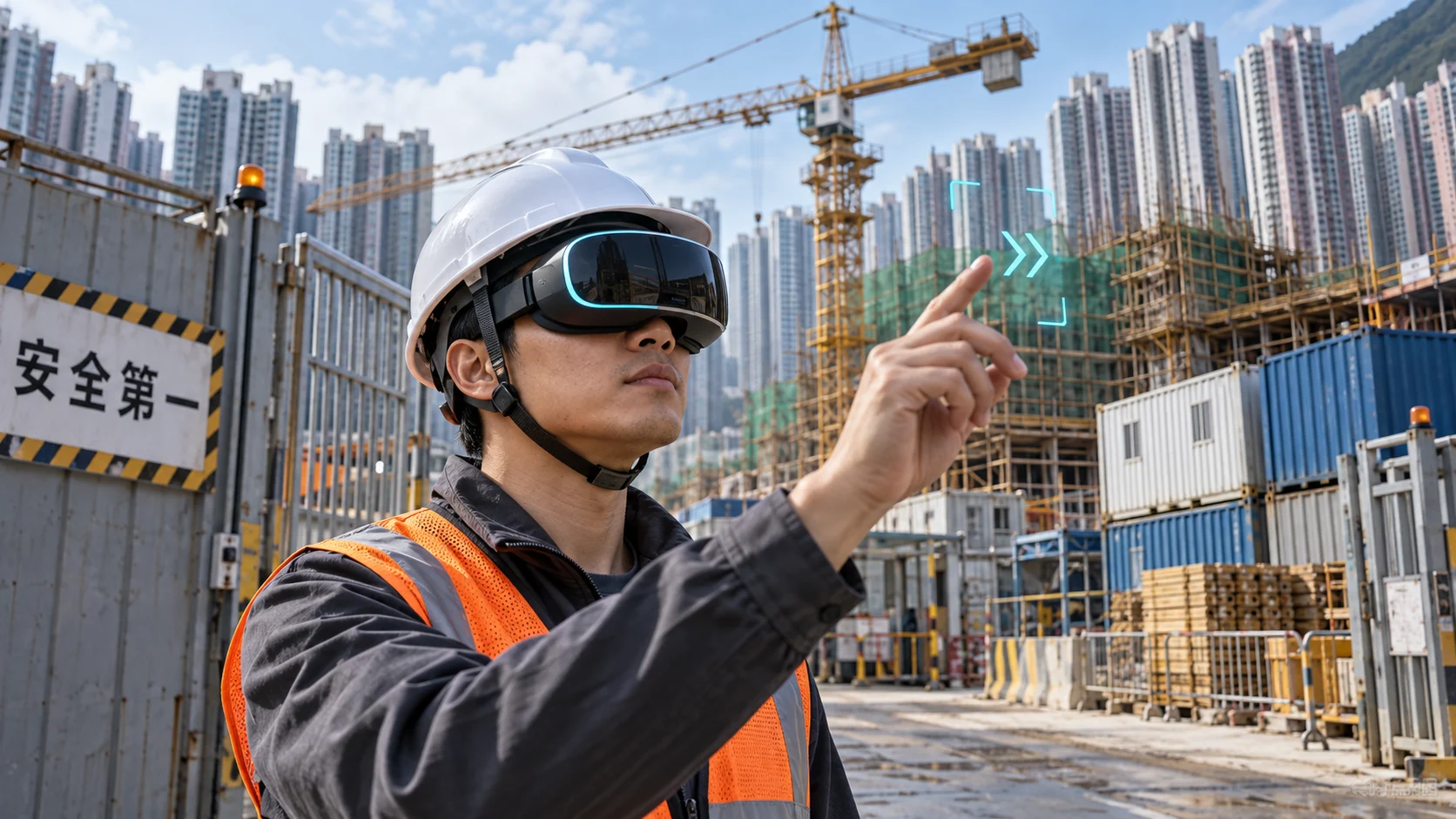
Using VR headsets, workers experience simulated emergencies like chemical spills or equipment failures. These immersive training scenarios teach VR safety protocols, reducing real-world risks and enhancing safety compliance. Source: Singapore Smart Nation

3. Data-Driven Performance Tracking
PUB’s VR systems log metrics like reaction times and decision accuracy, providing instant feedback. This smart site safety approach mirrors global trends in construction innovation, ensuring continuous improvement. Source: Water Environment Federation
4. Scalable Multi-User Training
Up to 20 operators can train simultaneously in shared VR spaces, making VR training scalable for PUB’s large workforce. This fosters teamwork and aligns with workplace safety standards.

Key Benefits of PUB’s VR Approach
PUB’s VR simulations deliver measurable advantages for water treatment training:
- Higher Retention: Achieves 70% knowledge retention, far surpassing traditional methods’ 20%.
- Faster Skills: Workers master complex tasks like pump maintenance 50% faster, boosting construction safety.
- Cost Efficiency: Eliminates physical setups, cutting training costs by 40% for sewage treatment operations.
- Future-Ready: Integrates with IoT and digital twins, aligning with extended reality trends in Hong Kong technology.
Global Impact and Inspiration
PUB’s success with VR education sets a benchmark for water management worldwide. By addressing safety challenges with immersive training, PUB demonstrates how virtual reality can transform high-risk industries. This approach inspires safety tech HK initiatives, where similar technologies enhance Hong Kong VR training for construction and water sectors. Source: Asian Development Bank Water Innovation
Conclusion: Shaping Safer Water Systems with VR
PUB’s VR simulations are revolutionizing water treatment training, offering scalable, data-driven solutions that outperform traditional methods. With 70% knowledge retention and 50% faster skill acquisition, VR training ensures safer, more efficient operations. Ready to bring this construction technology to your workforce? Download a free demo to explore how virtual reality can elevate safety training and smart site safety in your organization.
Keywords: PUB VR simulations, water treatment training, VR training, safety training, virtual reality, construction safety, immersive training, extended reality, construction technology, Hong Kong VR, safety tech HK, smart site safety, workplace safety, sewage treatment
What PUB’s VR Innovation Means for Hong Kong Utilities and Construction
Singapore’s PUB is not the only organisation grappling with the challenge of keeping workers safe in high-hazard, confined-space environments. Hong Kong’s own construction, property management, and infrastructure sectors face identical pressures — and the same technology that PUB uses to close the training gap is now available here.
VTM Digital’s Construction Training Platform (CTP) extends the same immersive VR simulation approach to Hong Kong’s built environment. Where PUB trains utility workers in sewage treatment plant procedures, VTM trains construction workers in confined space entry, fall arrest, and machinery proximity — applying the same principle: procedural memory built through simulation outperforms declarative knowledge from a lecture, every time.
VR Training for Hong Kong’s High-Risk Environments: How It Compares
| Training Approach | Knowledge Retention | Scalability | Risk During Training | Regulatory Alignment |
|---|---|---|---|---|
| Traditional lecture / video | ~20% | Limited by venue | Zero (but zero realism) | Meets statutory minimum |
| On-site supervised drills | 50–60% | Low — requires live site | Present (real hazards) | Exceeds minimum |
| VR immersive simulation (CTP) | Up to 70% | High — deploy anywhere | Zero (fully simulated) | Meets and exceeds — HK-specific scenarios |
The comparison is not abstract. Hong Kong’s Labour Department reports consistently show that falls from height and machinery accidents account for the majority of construction fatalities each year. PUB’s water sector data and VTM’s construction sector data tell the same story: when workers physically experience a hazard — even in simulation — their on-site response changes.
Applying Global VR Safety Leadership in Hong Kong
The lesson from PUB is not that Hong Kong needs Singapore’s exact VR system. It is that the investment in immersive simulation pays off in measurable safety outcomes — and that the technology is mature, proven, and ready for deployment. VTM builds Hong Kong-specific scenarios: the 平安卡 inspection procedure, 密閉空間工作實務守則 compliance, working at heights under 勞工處 regulations, and emergency evacuation on dense urban sites.
Global case studies like PUB’s confirm the direction. VTM executes the local implementation.
Interested in bringing proven VR safety training to your Hong Kong operations? Our team will assess your site’s specific hazard profile and recommend a deployment approach.